Flat Roof Ponding & Membrane Damage Repair in Aurora, CO
24/7 flat roof ponding repair and membrane triage dispatch in Aurora, CO. TPO/EPDM emergency seam welding, drainage clearing, and ponding water triage across Arapahoe County.
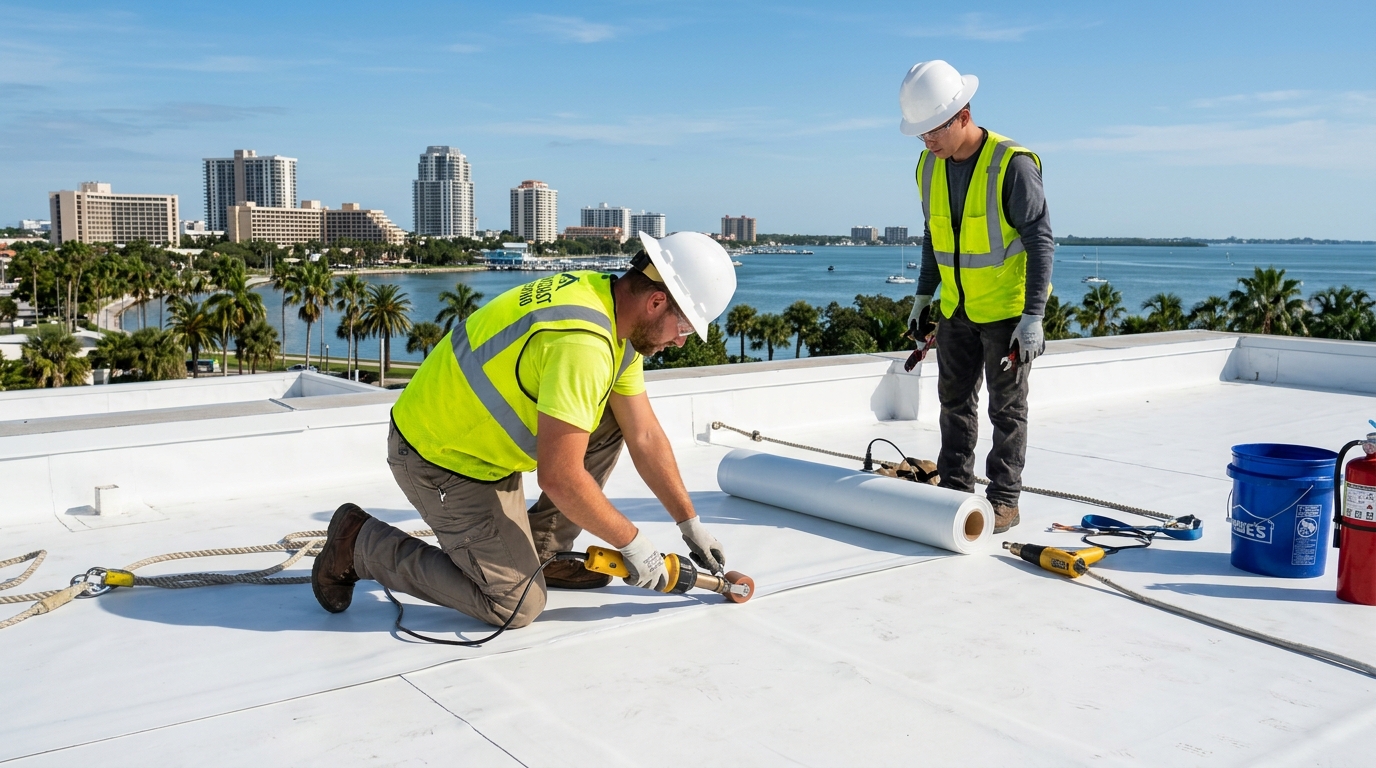
Engineered Low-Slope Drainage & Single-Ply Membrane Triage
Flat and low-slope roofing systems across Aurora—protecting commercial retail centers, industrial flex spaces along I-70, apartment complexes, and modern residential additions—face distinct hydrostatic hazards compared to steep-slope roofs. Without steep slopes to shed water rapidly, low-slope roofs rely on precise structural slopes, internal drains, and scuppers. Following intense Eastern Plains downpours, inadequate drainage leads to severe ponding water. Standing water that lingers longer than 48 hours breaks down membrane seams, accelerates UV degradation, and exerts thousands of pounds of concentrated dead load on underlying roof trusses.
1 Ponding Water Hydrodynamics & 48-Hour Thresholds
The National Roofing Contractors Association (NRCA) defines ponding water as any standing water that remains on a roof surface 48 hours or longer after precipitation has ceased. In Aurora, sudden downbursts depositing 2 inches of rain can overwhelm flat roof drainage. One square foot of water one inch deep weighs approximately 5.2 pounds. A 400-square-foot ponding area exerts over 2,000 pounds of localized weight on structural decking, causing deck deflection that deepens the depression and attracts even more water.
2 TPO & EPDM Single-Ply Membrane Seam Failures
Thermoplastic Polyolefin (TPO) and Ethylene Propylene Diene Monomer (EPDM) membranes are widely deployed across Aurora commercial properties. While durable, continuous thermal expansion, foot traffic, and UV exposure place immense stress on lap seams. In TPO systems, sub-standard hot-air welds can delaminate. In EPDM systems, aged seam tape dries out. Once seams pull apart, ponding water is drawn through the membrane via capillary action, saturating polyisocyanurate (polyiso) insulation boards beneath.
3 Emergency Water Evacuation & Sump Drainage Unblocking
Dispatched emergency crews immediately deploy submersible water pumps to evacuate standing water and eliminate structural overload. Technicians clear blocked internal drain sumps, remove debris from scupper outlets, and inspect perimeter parapet flashings. Once the substrate is dry, crews perform non-destructive moisture scans to evaluate whether underlying insulation boards can be preserved or require surgical extraction.
4 Hot-Air Robotic Seam Welding & Peel-and-Stick Triage
For permanent membrane repairs, certified technicians utilize industrial hot-air welding equipment (such as Leister Varimat robotic welders) to fuse new 60-mil TPO patches directly to existing cleaned membranes, creating a molecular bond stronger than the original sheet. On EPDM systems, technicians apply specialized solvent-free primers, heavy-duty self-adhering cover tape, and elastomeric lap sealants along all exposed patch margins.
✓ Tapered Insulation Retrofit & Positive Drainage Engineering
To permanently eliminate recurring ponding areas, contractors engineer custom tapered polyisocyanurate insulation saddle and cricket systems. By adding a 1/4-inch or 1/2-inch per foot slope to previously flat dead-level areas, storm runoff is actively directed toward existing roof drains and scuppers, ensuring full compliance with Aurora commercial building code drainage mandates.
Key Engineering & Statutory Compliance Highlights
- Aurora Building Division Verification: Dispatched roofing contractors maintain active municipal licensing, insurance, and supervisor registrations for Arapahoe and Adams Counties.
- ASTM D1970 Ice Barrier Mandate: Full continuous application of self-adhering modified bitumen underlayment on all roof eaves extending at least 24 inches past interior heated wall lines.
- 120+ MPH Wind Uplift Fastening: Enhanced 6-nail fastening schedule engineered to resist severe Eastern Plains convective storm outflow.
- Zero Form Friction: Direct live phone coordination with zero digital waiting or automated form submission delays.
- Colorado SB 12-038 Compliance: Strict adherence to Colorado consumer protection statutes prohibiting insurance deductible rebates or absorption.
Frequently Asked Questions About Flat Roof Ponding Repair
How long can standing ponding water remain on a flat roof before causing damage?
Building codes and roofing manufacturers mandate that flat roofs drain completely within 48 hours after rain. Standing water remaining longer than 48 hours accelerates chemical breakdown of seams, voids manufacturer warranties, and risks structural roof deck deflection.
Can an active leak on a flat roof be patched while it is still raining in Aurora?
Yes. Emergency crews utilize specialized wet-surface single-ply mastic sealants and weighted rubber diverter membranes that adhere underwater to immediately stop active interior water cascades until weather allows permanent hot-air welding.
What is the difference between TPO and EPDM flat roofing?
TPO is a white thermoplastic membrane with heat-welded seams that reflects solar UV rays and helps lower commercial cooling costs. EPDM is a durable black synthetic rubber membrane joined with seam tape and adhesive. Both perform exceptionally well in Colorado when properly sloped and maintained.