Emergency Roof Leak Repair & Active Water Intrusion Triage in Aurora, CO
24/7 emergency roof leak repair dispatch in Aurora, CO. Immediate interior water containment, attic FLIR thermal imaging, and storm damage stabilization across Arapahoe County.
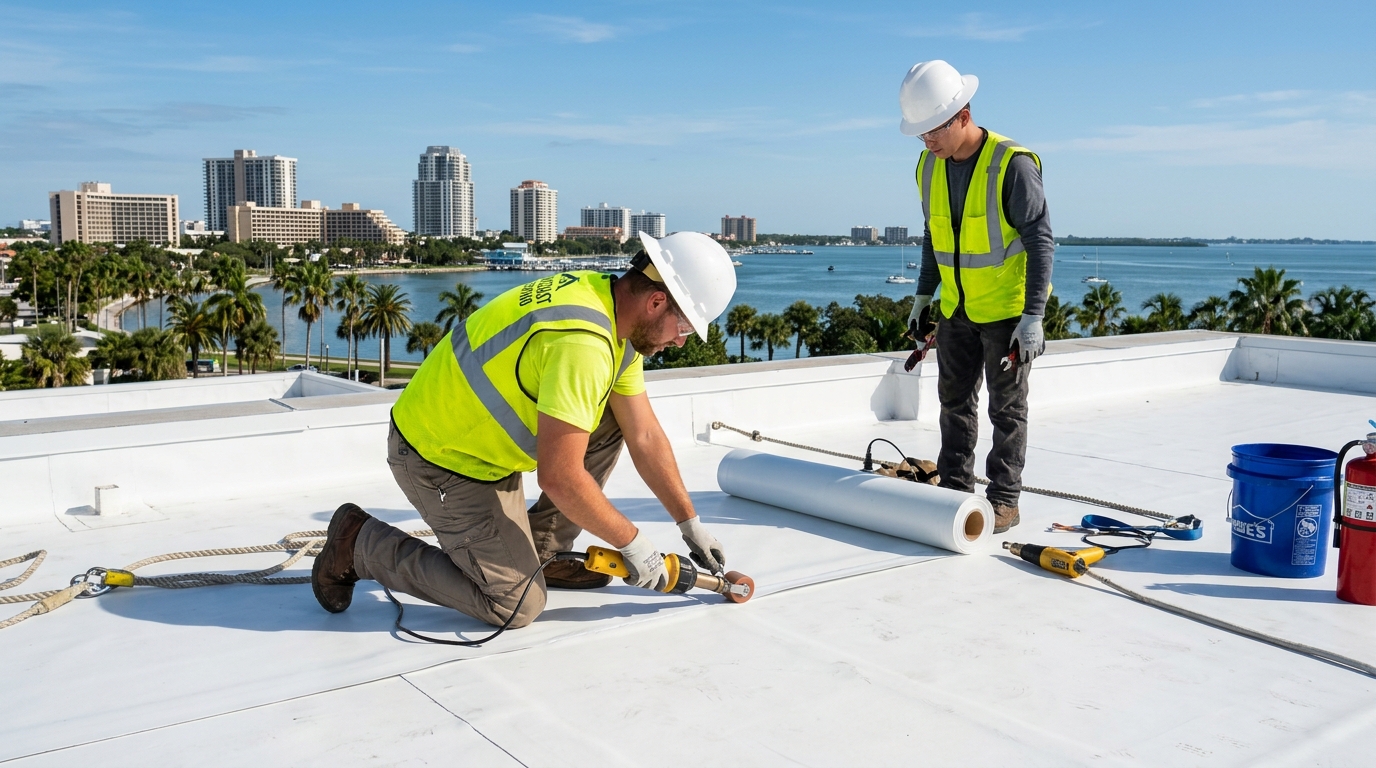
Rapid Structural Protection for Active Roof Leaks in Aurora & Arapahoe County
When convective Eastern Plains supercells, microburst downpours, or rapid snowmelt breaches your roofing envelope, active water infiltration threatens the structural integrity of your Aurora home within minutes. Aurora residences—spanning from established ranch neighborhoods in Delmar Parkway and Meadowood to newer multi-story construction across Southshore and Tallyn's Reach—face severe hydrostatic pressures when wind-driven precipitation bypasses storm-damaged shingles and compromised underlayments. Our 24/7 independent emergency roof dispatch service routes vetted, licensed Colorado roofing contractors directly to your property to halt water intrusion before drywall collapses, electrical fixtures short-circuit, and toxic mold colonies establish inside wall assemblies.
1 Immediate Hydrostatic Relief & Attic Ingress Tracing
The moment storm water penetrates an exterior roof covering, gravity forces it along structural framing—frequently traversing horizontal roof rafters, descending electrical conduit lines, or pooling atop plastic ceiling vapor barriers before saturating finished drywall. Dispatched emergency specialists initiate triage by conducting controlled ceiling relief punctures at visible sagging points to channel trapped water into collection reservoirs. Simultaneously, technicians access attic crawlspaces equipped with calibrated FLIR thermal imaging cameras and high-frequency non-destructive moisture meters. By mapping temperature differentials across rafter bays and insulation blankets, crews pinpoint the exact subterranean entry point on the roof deck rather than relying on guesswork.
2 Eastern Plains Convective Storm Dynamics & High-Wind Rain Ingress
Aurora's position along Colorado's Eastern Plains transition zone exposes rooftops to intense convective thunderstorm clusters. In summer, severe storms deliver torrential downpours exceeding 2.5 inches per hour accompanied by 60–80 MPH straight-line winds. In winter and early spring, heavy upslope storms deposit dense snow. When interior heating melts snow layers from underneath, cold prairie night winds freeze the runoff at cold eaves, creating massive ice dams. Trapped meltwater backs up behind ice barriers, exploiting microscopic voids around fastener shanks, underlayment laps, and wall flashing to leak directly into living rooms and bedrooms.
3 Non-Destructive Moisture Mapping & Structural Decking Assessment
Effective leak mitigation requires preserving healthy roofing assemblies while accurately identifying saturated building components. Contractors utilize non-destructive electronic moisture detection equipment (including Tramex Dec Scanners) to measure the percentage of moisture saturation within oriented strand board (OSB) and CDX plywood sheathing without puncturing the waterproof membrane. Where wood rot, mold growth, or delamination has occurred from recurring micro-leaks, technicians document the affected square footage with timestamped digital photography, establishing comprehensive forensic substantiation required by insurance adjusters and Aurora building inspectors.
4 Aurora Building Division Standards & Mandatory Permits
All structural roof repairs across Aurora, Centennial, and unincorporated Arapahoe County must comply with the 2021/2024 International Residential Code (IRC) and local municipal amendments. While emergency water mitigation and temporary membrane securing are performed immediately to halt ongoing property destruction, subsequent permanent roof repairs exceeding one roofing square (100 sq ft) require a formal building permit pulled by an actively licensed Colorado contractor. Our dispatch network ensures that every contractor mobilized possesses verified Colorado licensing, state-mandated workers' compensation coverage, and active commercial general liability insurance.
✓ Step-by-Step Restoration Protocol & High-Wind Nailing
Following emergency stabilization, contractors implement permanent restorative repairs utilizing a strict 5-step methodology: (1) Surgical removal of damaged shingles down to sound structural decking; (2) Replacement of degraded decking with APA-rated CDX plywood secured with ring-shank nails; (3) Installation of self-adhering ASTM D1970 polymer-modified bitumen ice-and-water shield extending at least 24 inches beyond the interior heated wall line; (4) Application of ASTM D3161 Class F / ASTM D7158 Class H high-wind rated shingles installed with an engineered 6-nail fastening matrix; and (5) Application of high-temperature elastomeric polyurethane sealants along all valley cuts, vent penetrations, and masonry flashings.
Key Engineering & Statutory Compliance Highlights
- Aurora Building Division Verification: Dispatched roofing contractors maintain active municipal licensing, insurance, and supervisor registrations for Arapahoe and Adams Counties.
- ASTM D1970 Ice Barrier Mandate: Full continuous application of self-adhering modified bitumen underlayment on all roof eaves extending at least 24 inches past interior heated wall lines.
- 120+ MPH Wind Uplift Fastening: Enhanced 6-nail fastening schedule engineered to resist severe Eastern Plains convective storm outflow.
- Zero Form Friction: Direct live phone coordination with zero digital waiting or automated form submission delays.
- Colorado SB 12-038 Compliance: Strict adherence to Colorado consumer protection statutes prohibiting insurance deductible rebates or absorption.
Frequently Asked Questions About Emergency Roof Leak Repair
How do dispatched technicians stop active roof leaks during a live Colorado rainstorm?
During active storm conditions, safety regulations prohibit full tear-offs. Dispatched crews deploy emergency water diversion membranes, commercial rubberized magnetic patches, or lumber-anchored 10-mil poly tarps over the exterior ingress zone. Indoors, technicians perform controlled ceiling punctures to relieve pooling sheetrock weight and install commercial dehumidification equipment to arrest structural framing mold.
Will my homeowner insurance cover emergency roof leak triage services in Aurora?
Yes. Standard Colorado homeowner property insurance policies explicitly require property owners to take reasonable steps to prevent secondary water damage following storm-related roof breaches. Invoices for emergency mitigation, tarping, and moisture testing provided by our dispatched licensed contractors are formatted for direct carrier reimbursement under typical dwelling coverage.
Why does water leak through my light fixtures or interior doorways far from the roof puncture?
Water adheres to structural framing members via surface tension. Meltwater or wind-driven rain penetrating at a roof ridge or chimney will travel down the slope of a 2x4 rafter, run horizontally along an attic joist or HVAC duct, and pool above the lowest physical opening—frequently a ceiling light fixture or doorway drywall seam many feet away from the original puncture.